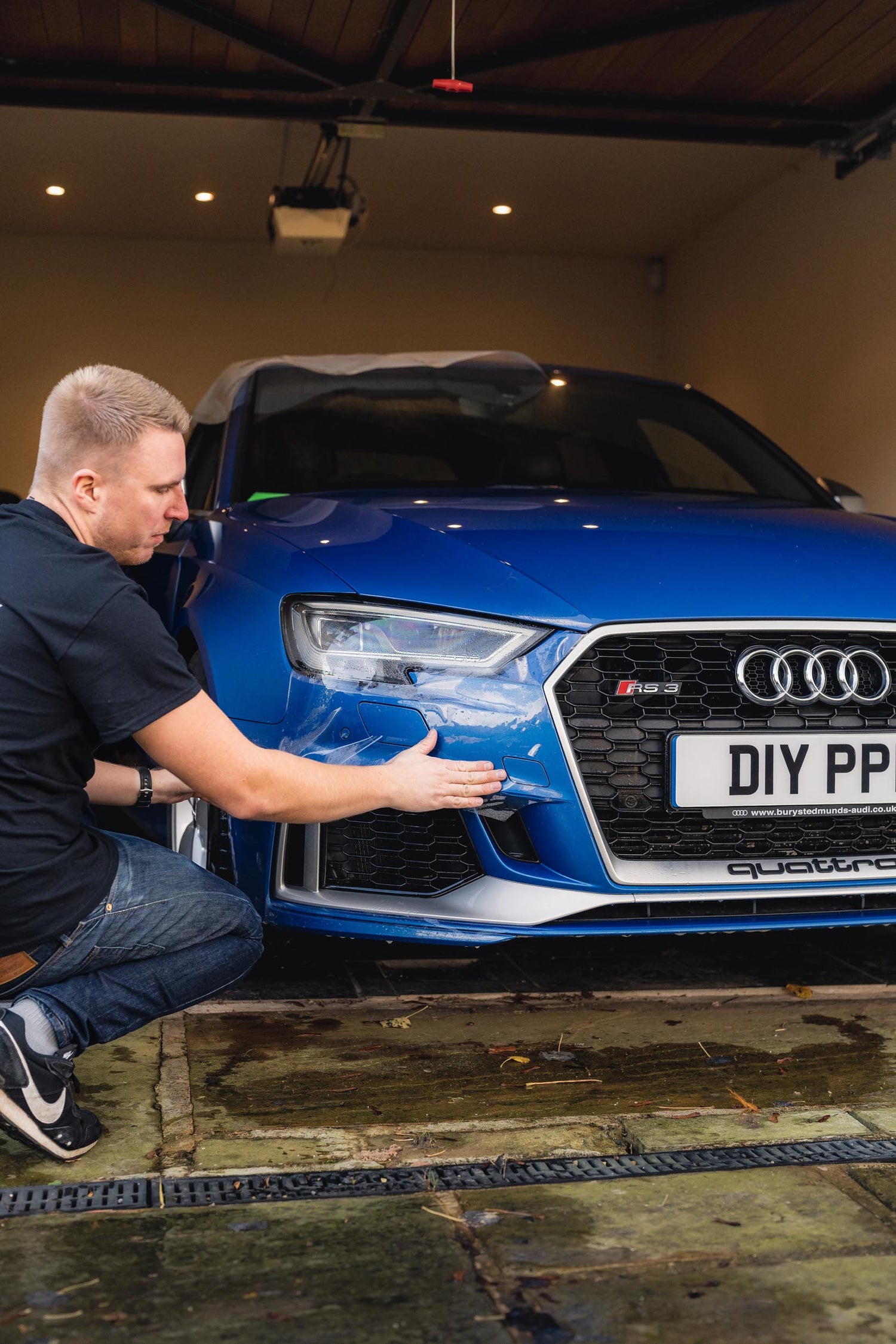

A great PPF install can be let down in the first few weeks by the wrong wash routine. A customer takes a jet wash nozzle right up to an edge, or attacks a bird dropping with a harsh cleaner, and suddenly they're on the phone asking why their film looks tired. A few minutes of aftercare advice at handover saves you that call, and it shows the customer they've picked a pro.
Here's what we'd tell every customer before they drive away.

1. Wash gently with the right products
Regular washing stops dirt and grime building up on the film. Tell customers to use a good pH-neutral car shampoo and a microfibre wash mitt, and to dry the car with a soft, absorbent towel, taking care around the edges and corners of the film.
Just as important is what to avoid: harsh chemicals, abrasive cleaners, and abrasive polishes or compounds. They can damage the top of the film and dull the finish you've worked hard on.
2. Jet washing is fine, but respect the edges
Customers often ask if they can still use a pressure washer. They can, with a bit of care. Set it to a wide spray and keep the nozzle at least 50cm away from the edges of the film. A tight, close jet aimed straight at an edge is the quickest way to lift it.
It's worth pointing out where the edges are on their car as you walk round it. Most people won't spot them otherwise, which is a nice problem to have, but it means they don't know where to be careful.

3. Get bird droppings off quickly
Bird droppings and other nasty contaminants should come off as soon as they appear, using a gentle wash rather than scrubbing. The film is there to take the hit instead of the paint, but leaving it to bake on doesn't help anyone.
4. Topping up protection
PPF can be ceramic coated. A flexible ceramic coating, or a non-abrasive wax applied twice a year, keeps the film looking glossy and makes washing easier. If you offer coatings, this is a natural add-on to mention at handover rather than a hard sell.
5. Explain self-healing and the warranty
PRO PPF film is self-healing, with activation from around 30 °C, so light marks in the top layer can disappear with warmth. It's a good moment to manage expectations: self-healing is for minor scratches, not deep damage.
Our film also comes with a 10-year warranty against yellowing, cracking, blistering and delamination. As a fitter, you register it for your customer, and they get a scannable QR code so they can check it for themselves. Showing them that QR code at handover is a simple way to finish the job on a professional note.
Make it a habit
The easiest way to get this right every time is to give each customer the same short aftercare chat (or a printed card with these points) at every handover. It protects your work, cuts down on callbacks and keeps your reviews looking healthy.
If you're still getting your fitting technique dialled in, our guide to common PPF fitting problems and how to fix them is a good next read, and our one-day PPF training course in Sheffield covers it hands-on.
Fit PRO PPF on your next job
Want film that's backed by a 10-year warranty your customers can verify? Open a free PRO PPF trade account. There are no plotters, no pattern subscriptions and no minimum orders, and your pre-cut kit is dispatched within 48 hours of you approving the pattern.